Sudoku
Fill every row, column, and box with clean number logic.
8 min
Playable puzzle game library
Browse free logic puzzle games built around clean deduction, grid logic and satisfying rules. Pick Sudoku, Killer Sudoku, Nonogram, Norinori, Kakuro, Kuromasu, Futoshiki, KenKen, Suko, Hitori, Binary or Dots and Boxes, then start playing online.
Game library
Each game page includes a playable puzzle, difficulty options, rules, strategies and FAQs, so the library is ready for players and search engines without thin placeholder pages.
Fill every row, column, and box with clean number logic.
8 min
Reveal pixel-art pictures from row and column clues.
5 min
Shade domino pairs while each region keeps exactly two cells.
2 min
Shade L, I, T and S tetrominoes while keeping one connected area.
2 min
Use cross-sums and digits 1 to 9 to solve number grids.
2 min
Combine Sudoku rules with coloured cage totals.
10 min
Fill nine irregular regions instead of tidy 3x3 boxes.
8 min
Outside clues sum the digits between the 1 and the 9.
10 min
Both diagonals must also hold the digits 1 to 9.
8 min
A quick 6x6 Sudoku with 1 to 6, great for beginners.
2 min
Fill tanks so water settles to flat levels matching the clues.
2 min
Make each run of white cells a straight of consecutive digits.
3 min
Split the grid into a full set of dominoes, each used once.
2 min
Sew one stitch between every pair of neighbouring regions.
3 min
Draw one diagonal in every cell, match the numbers, and never close a loop.
2 min
Fill each room with 1 to its size; keep equal numbers spaced down each line.
2 min
Lay one railway from entrance to exit and match every row and column count.
3 min
Label each region by how many cells you fill, and connect every number.
3 min
Trace one snake from head to tail; it never touches itself and matches every count.
2 min
Draw one loop around the walls: white clues stay inside, black stay outside, arrows count the wall.
4 min
Draw one loop through every circle: white circles balance their two arms, black circles don't.
3 min
Place + and - poles so no equal poles touch and the counts match.
2 min
Shade cells so the weighted sums match every clue.
2 min
Rotate tiles so every pipe joins into one connected network.
2 min
Place triangles so the leftover white area forms rectangles.
3 min
Use the numbers to clear every safe cell without hitting a mine.
2 min
Crack the hidden colour code from the black and white clues.
3 min
Slide the numbered tiles into order around the empty square.
3 min
Jump pegs over each other and clear the board down to one.
5 min
Cross out numbers so every row and column adds up to its target.
3 min
Colour the map with four colours so no two neighbours match.
3 min
Place numbers while every inequality sign stays true.
2 min
Solve arithmetic cages while rows and columns use every number once.
2 min
Place every number once using 2x2 sums and colour totals.
1 min
Place tower heights using skyline clues around the grid.
2 min
Place crowns in every row, column and coloured region.
2 min
Place stars in every row, column and coloured region.
3 min
Shade duplicate numbers while keeping the white cells connected.
2 min
Shade blockers so numbered cells see the right white squares.
3 min
Carve one connected cave; every clue counts its sightline.
3 min
Shade clouds so each circle counts the right total area.
3 min
Divide the grid into rotationally symmetric star regions.
2 min
Reveal a hidden picture from 3x3 neighbourhood count clues.
2 min
Place tents beside trees while matching every row and column clue.
2 min
Fill thermometers from bulb to tip while matching row and column totals.
2 min
Draw one loop through black and white pearl clues.
2 min
Draw one unique loop around numbered edge-count clues.
2 min
Shade cells from arrow clues, then draw one unique loop.
3 min
Drive one loop through every coloured room exactly once.
3 min
Loop through every circle: white goes straight, black turns.
3 min
Connect matching coloured endpoints and fill every cell.
2 min
Colour black and white cells so both colours connect and no 2x2 block matches.
2 min
Separate numbered islands with one connected wall.
3 min
Shade one connected wall around numbered clue rings.
3 min
Connect every consecutive number in one touching path.
1 min
Shade divided rooms while keeping black cells apart and white cells connected.
3 min
Divide the grid into rectangles whose areas match the clues.
2 min
Fill numbered regions so each region's size matches its number.
2 min
Fill number regions while equal numbers never touch.
1 min
Place bulbs to light every white cell without bulb conflicts.
2 min
Balance 0s and 1s while avoiding triples and duplicate lines.
3 min
Connect numbered islands with single or double bridges.
2 min
Find the hidden fleet using row clues, column clues and no-touching logic.
3 min
Draw lines, claim boxes, and outplay human or AI opponents.
5 min
Clone, jump and convert pieces on tactical blocked grids.
5 min
Race across the board while placing walls to block paths and slow rivals.
3 min
Make mills, capture pieces and outplay human or AI opponents.
5 min
Place 12 pieces, use diagonal mills, and outplay human or AI opponents.
5 min
Connect opposite sides in a bright two-player strategy game with AI.
4 min
Place X or O, then race to make or prevent a matching line.
3 min
Puzzle books
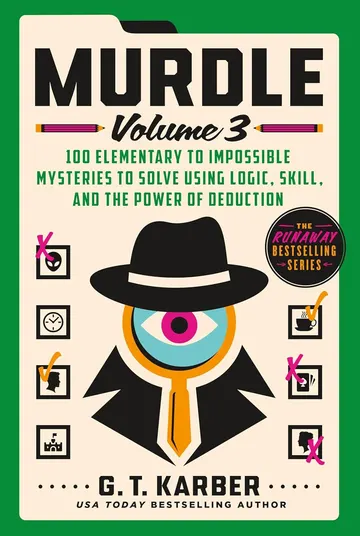 Murdle: Volume 1100 illustrated whodunits you crack with a logic grid — a mystery novel you actually solve.View on Amazon →
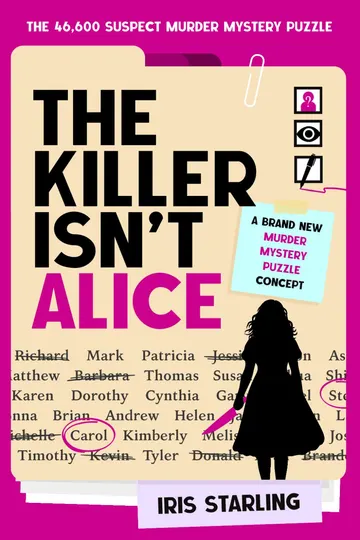 The Killer Isn't AliceMurder-mystery logic puzzles that link into one bigger case — follow the clues to the culprit.View on Amazon →
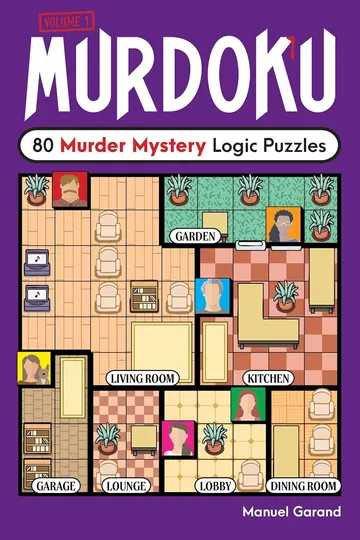 MurdokuSudoku with a story: fill the grid and the solution names the killer.View on Amazon →
As an Amazon Associate we earn from qualifying purchases.
Escape rooms at home
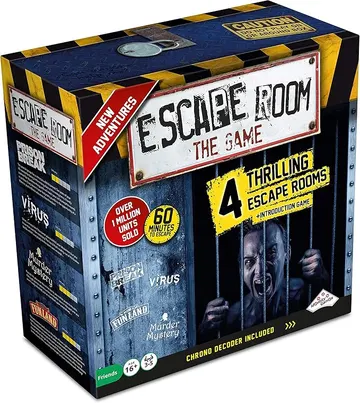 Escape Room The Game, Version 2Three sealed escape rooms you play at the table against the clock — no app, no setup.View on Amazon →
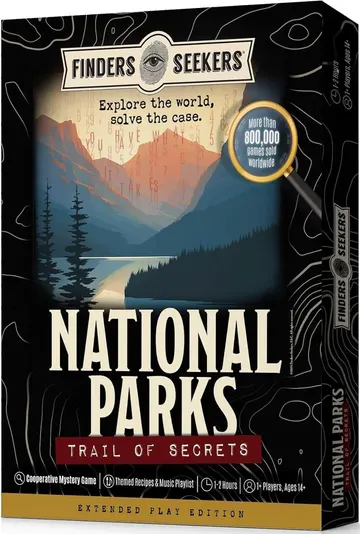 National Parks Mystery AdventureA trail-hopping mystery you solve from the couch with maps, codes, and handed-off clues.View on Amazon →
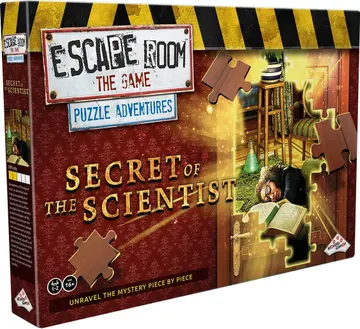 Secret of The ScientistA locked lab and a vanished researcher — work the puzzles and crack the case in an evening.View on Amazon →
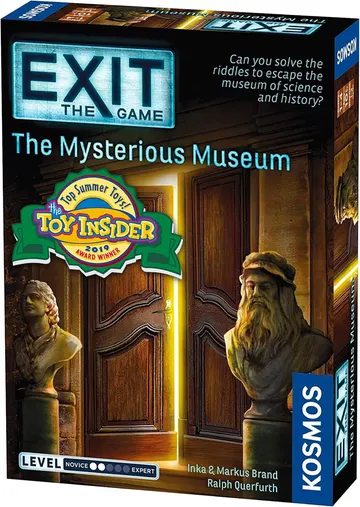 Exit: The Mysterious MuseumLocked in after hours, the exhibits hold the way out — a clever escape kit for 1–4 players.View on Amazon →
As an Amazon Associate we earn from qualifying purchases.
Logic puzzle games are challenges solved by deduction rather than reflexes, trivia or hidden information. A good puzzle gives you enough clues to make progress, then rewards careful scanning, elimination and pattern recognition.
Most games on this site use grids because grids make constraints easy to see. Rows, columns, regions, clue totals and shaded cells all create rules that interact with one another.
Online logic puzzle games are quick to start and easy to retry. You can switch difficulty, use built-in controls, check rules nearby and return to the same puzzle type whenever you want a focused break.
The online format is also useful for learning. Highlighting, hints, undo buttons and related tools can help you understand a puzzle without replacing the satisfaction of solving it yourself.
Choose Sudoku if you want the classic 9x9 number challenge. Choose Killer Sudoku if you enjoy cage sums, choose Nonogram if you like turning clues into a picture, choose Norinori for compact shading logic, choose Kakuro for cross-sums, choose Kuromasu for line-of-sight shading, choose Futoshiki if inequality signs sound satisfying, choose KenKen for arithmetic cages, choose Suko for colourful sum logic, choose Hitori for duplicate-shading deduction, choose Binary for 0-and-1 balance logic, and choose Dots and Boxes if you want a competitive strategy game.
There is no single best starting point. If you are new to logic games, Sudoku, Futoshiki and small Nonograms are friendly first choices. Kakuro and Norinori add different styles of constraint once you want something less familiar.
The live games cover number placement, cage sums, picture logic, shading, cross-sums, inequalities and competitive line-drawing strategy.
Keeping these games in a dedicated hub makes the site easier to scan. The homepage can remain the broad entry point, while this page focuses on game choice and puzzle-game discovery.
FAQ
You can currently play Sudoku, Killer Sudoku, Nonogram, Norinori, Kakuro, Kuromasu, Futoshiki, KenKen, Suko, Hitori, Binary and Dots and Boxes online.
Yes. The playable game pages are free to use in your browser.
Sudoku and small Nonograms are usually the easiest starting points because their rules are familiar and visual.
Yes. The homepage covers the whole site, while this page focuses specifically on playable logic puzzle games.